CIFRI Awards

Meghalaya
In a major push towards revitalising inland fisheries and strengthening sustainable livelihoods in Himachal Pradesh, the ICAR-Central Inland Fisheries Research Institute (ICAR-CIFRI) has intensified its technological and scientific partnership with the Department of Fisheries, Government of Himachal Pradesh.
The roadmap for renewed collaboration was discussed during an interaction between the ICAR-CIFRI team, led by Dr.PradipDey, Director, ICAR-CIFRI, and Shri Om Kant Thakur, IAS, Director-cum-Warden, Department of Fisheries, Himachal Pradesh. Dr.SomNath, Assistant Director of Fisheries, Himachal Pradesh, also accompanied the Department's team during the interaction.
The discussions focused on transforming the state's reservoirs and inland waters into productive, sustainable and technology-enabled fisheries ecosystems, with emphasis on reservoir-specific fisheries management, cage and pen culture, stock enhancement, quality fish seed production, conservation and capacity building.
From scientific assessment to action-oriented fisheries management Himachal Pradesh possesses a diverse reservoir fisheries resource comprising GobindSagar, Pong, Kol Dam, Chamera-I, Chamera-II and Chamera-III, each having distinct ecological, hydrological and fisheries characteristics. ICAR-CIFRI's long-standing engagement with the state dates back to 1982, when a Reservoir Research Centre was established at Bilaspur for GobindSagar fisheries research.
Recent CIFRI assessments have highlighted the need for strengthened scientific management. In Gobind Sagar, fish yield declined from 149 kg/ha/year in 2013 to 31 kg/ha/year in 2020, with changing hydrological conditions, deterioration in water quality, pollution, erratic precipitation, loss of breeding grounds and altered recruitment patterns as identified. Similarly, CIFRI's assessment of Pong Reservoir identified 12 potential breeding grounds and emphasised their protection and development as conservation areas, along with scientific regulation of fishing effort, appropriate mesh size, protection during breeding seasons and stocking with larger-sized Indian Major Carp seed.
Cage culture emerges as a promising production pathway A key highlight of CIFRI's technological interventions in Himachal Pradesh has been the demonstration of cage-based fish production. Forty-eight HDPE modular cages—24 each in Pong and Gobind Sagar reservoirs—were installed and stocked with Pangasianodon hypophthalmus. The intervention generated an average production of 1.9 tonnes per cage, with a total harvest of 102.85 tonnes and revenue generation of ₹73.82 lakh. The project demonstrated the feasibility of commercial-scale table-fish production from reservoirs located in a temperate climatic region.
Building on this experience, ICAR-CIFRI and the Department of Fisheries, Himachal Pradesh, will work towards identifying economically viable and locally preferred fish species for cage culture in Pong, Gobind Sagar, Kol Dam and Chamera-I reservoirs. Special emphasis will also be placed on rainbow trout cage culture in Kol Dam Reservoir, while floating pen culture in Pong Reservoir will be explored for in-situ production of Indian Major Carp stocking materials.
Quality seed, conservation and stock enhancement at the centre of the strategy The proposed action plan places strong emphasis on standardised stock enhancement protocols across the state's reservoirs. Local production of quality seed of Labeo calbasu (calbasu) and Tor putitora (golden mahseer) will be promoted to simultaneously address production, conservation and biodiversity objectives.
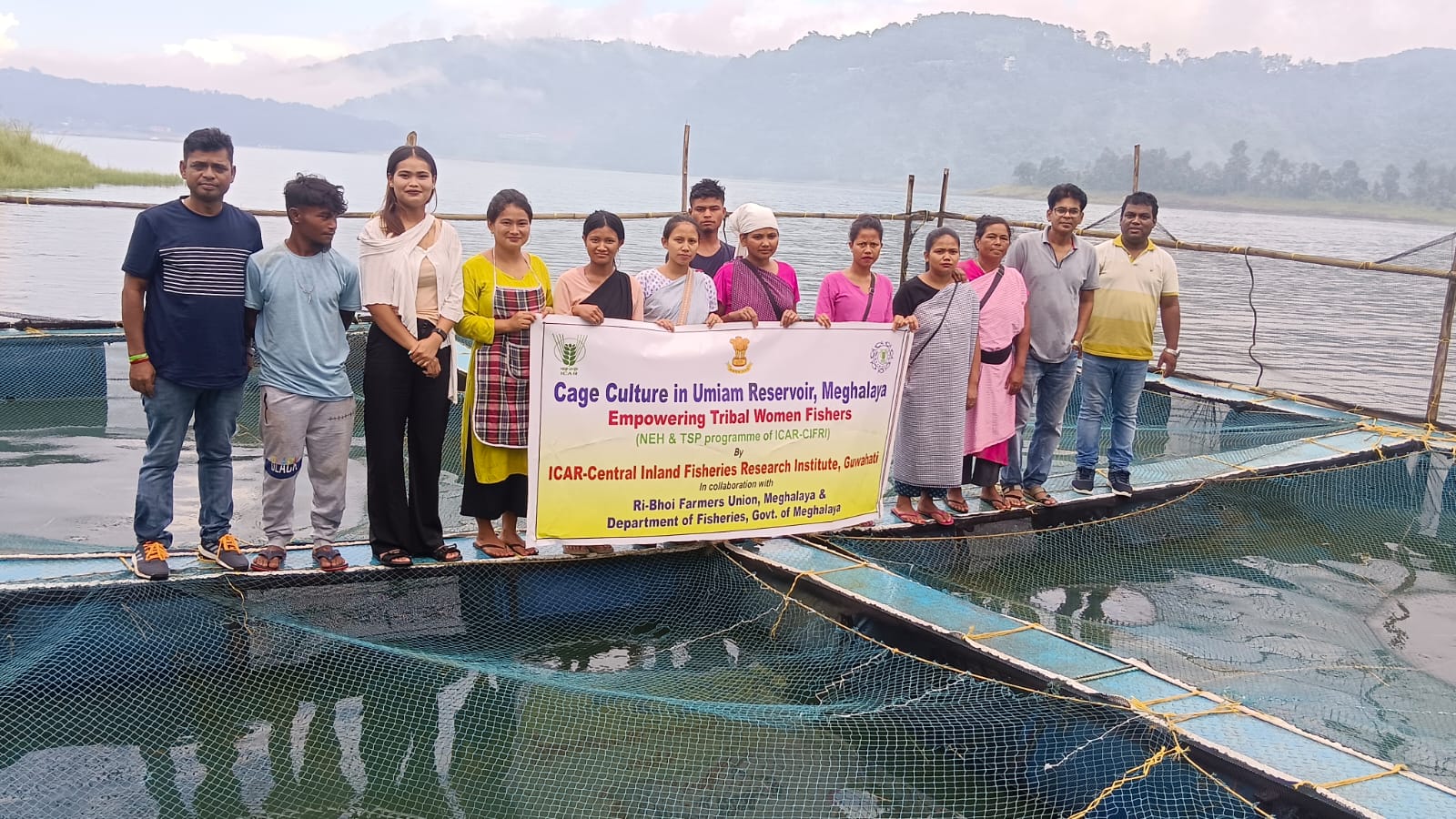
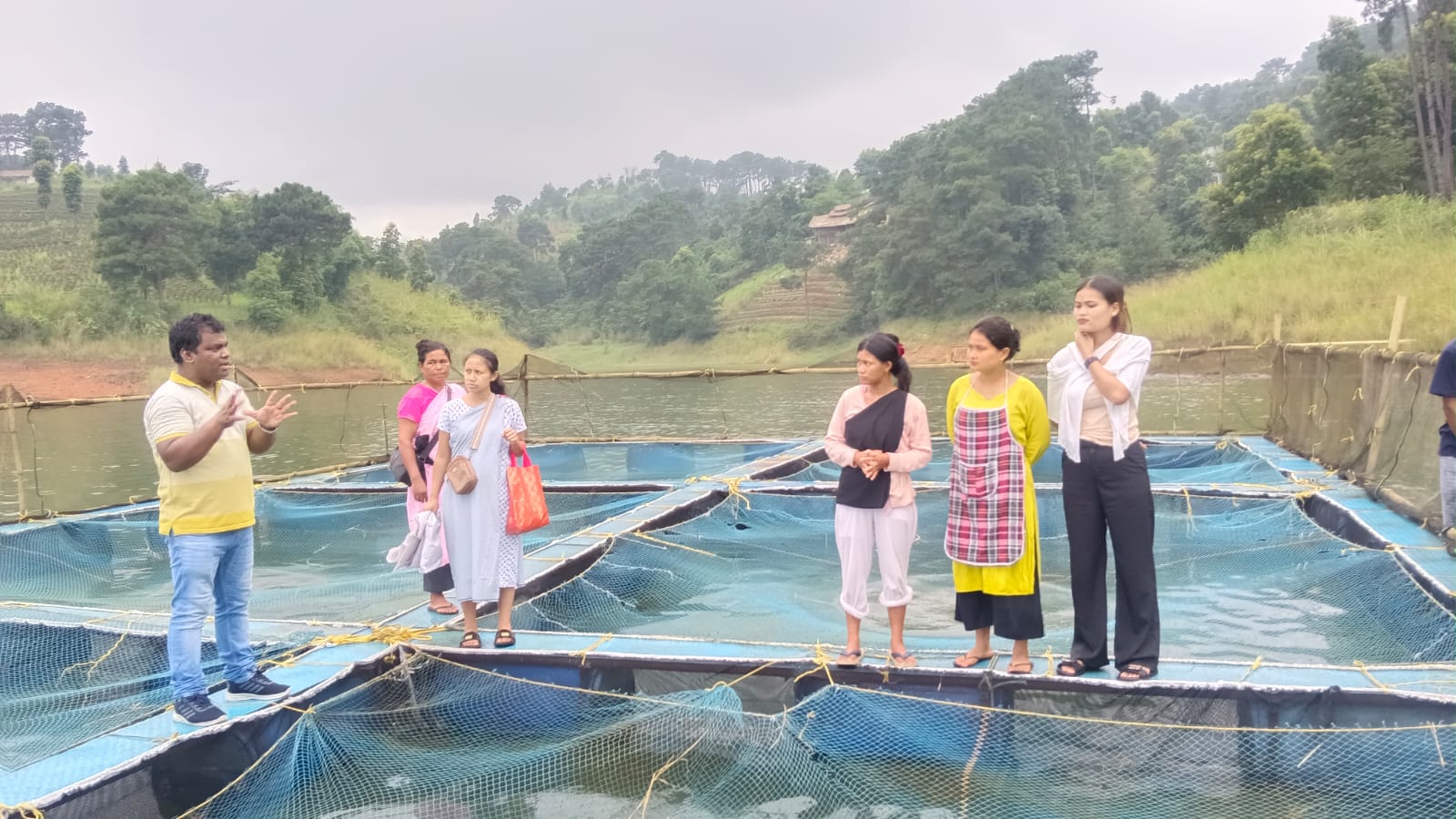
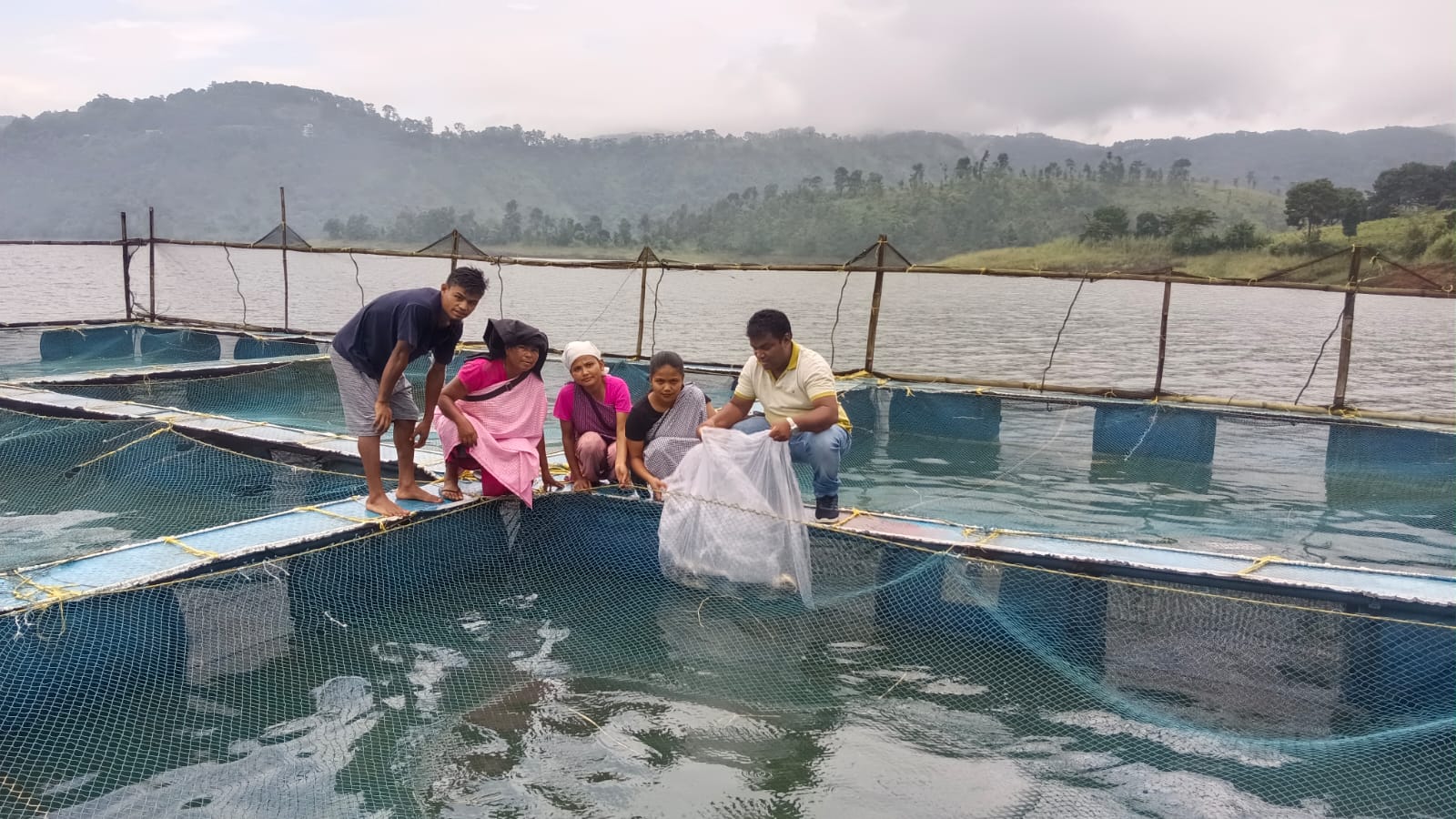
The initiative represents ICAR-CIFRI’s continued efforts to develop, demonstrate and refine scientifically validated cage culture technologies suited to the ecological conditions of the mid-altitude reservoirs of Northeast India. By combining scientific knowledge with community participation, the programme seeks to improve fish growth and survival, production efficiency, income generation and livelihood security among local fishing communities. The intervention also demonstrates the potential of reservoir fisheries as a sustainable source of employment and rural economic development.
Technology-Driven Approach to Empower Tribal Communities
Reflecting on the occasion, Dr. Dey, emphasized empowering women and tribal communities as entrepreneurs, technology adopters and decision-makers in sustainable fisheries. He highlighted scientific cage culture as a means to transform tribal women into leaders of fisheries-based enterprises, strengthening livelihoods, incomes and community resilience. Dr. Dey reaffirmed ICAR-CIFRI’s commitment to promoting gender-responsive, technology-driven and community- led fisheries models across the Northeast, in alignment with the objectives of Blue Revolution 2.0.
Scientific Guidance Strengthens Cage Culture Practices
ICAR-CIFRI scientists provided hands-on guidance to the participating women fishers on improved cage culture practices. Dr. Pronob Das highlighted the scientific refinement of cage culture protocols for the mid-altitude reservoirs of Meghalaya and briefed the beneficiaries on improved production practices. Dr. Shyamal C. S. Das emphasized the importance of scientific feeding and fish health management, while Mr. Amulya Kakati stressed the need for systematic monitoring, timely interventions and precautionary measures to improve fish growth, survival and overall production.
Ri-Bhoi Farmers’ Union Appreciates ICAR-CIFRI’s Support
Shri D. Majaw, President, Ri-Bhoi Farmers’ Union (RFU), Meghalaya, along with executive members of the Union, attended the programme. He highlighted the collaboration between ICAR-CIFRI and RFU towards the socio-economic development of tribal fish farmers and fishers. He appreciated the successful cage culture trials at Umiam Reservoir and acknowledged the scientific guidance, technical support and capacity-building efforts provided by ICAR-CIFRI to local fishing communities.
Women Fishers Express Confidence in Improved Livelihoods
Representing the beneficiary group, Ms. Banri L. Nongbri expressed gratitude to ICAR- CIFRI for providing fish seed and technical guidance. She expressed confidence that the intervention would contribute to enhancing household income and strengthening the economic security of tribal women fisher families associated with cage culture at Umiam Reservoir.
A Model for Women-Led Sustainable Fisheries in Northeast India
The Fish Seed Stocking Programme marks an important milestone in advancing women-led fisheries-based livelihoods and sustainable cage aquaculture in the mid-altitude reservoirs of Northeast India. The initiative demonstrates how scientific technology, institutional support and community participation can converge to transform reservoir fisheries into a stronger livelihood platform for tribal communities. Through continued technological refinement, capacity building and field-level support, ICAR-CIFRI aims to facilitate the wider adoption of sustainable and economically viable cage culture technologies across the Northeast.
The initiative reinforces ICAR-CIFRI’s commitment to taking science from the laboratory to the community and empowering tribal women to become active drivers of sustainable fisheries development.